VALORANT Champions Shanghai 2026 group stage delivers sixteen-team race for the world title
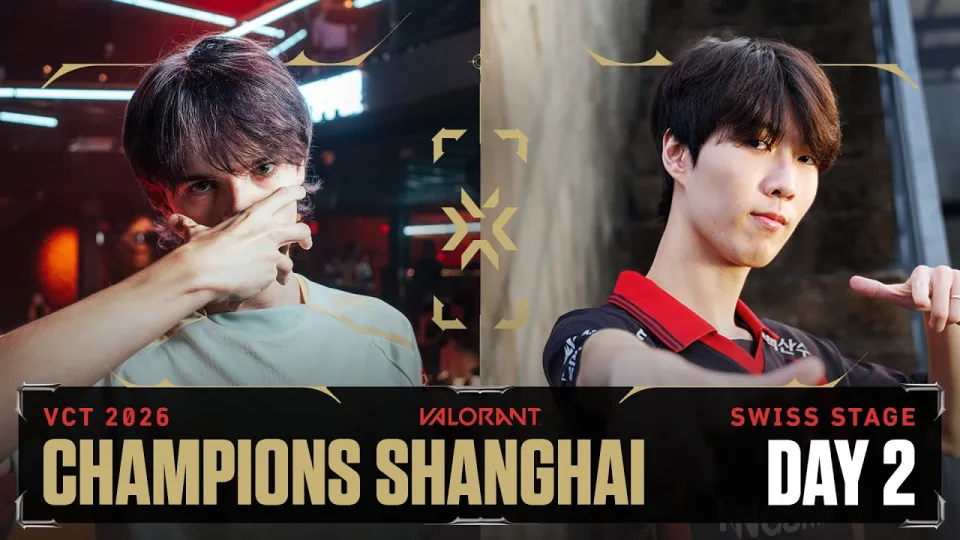
Video: VALORANT Champions Shanghai — Group Stage — Day 2
You can order the same kind of articles for your own video to boost it on YouTube and Google. Just message the Telegram bot @sat_sit_bot. The bot writes and publishes the articles itself (with your YouTube video embedded) on popular topical websites (no ads). Try it free: 50 articles on us.
· based on the channel VALORANT Champions Tour
Key takeaways
- VALORANT Champions Shanghai is the 2026 world championship, running from September 24 to October 18.
- Sixteen teams qualify from four regions: Americas, CN, EMEA and Pacific.
- Group Stage Day 2 streamed on the VALORANT Champions Tour channel on September 25, 2026.
- Two Masters events in 2026 already crowned new champions, so Shanghai decides the year's biggest trophy.
- VCT partners for 2026 include AWS, Coinbase, Red Bull, HyperX, Mastercard, OnePlus and Verizon.
VALORANT Champions Shanghai is the 2026 world championship, and its group stage decides which sixteen-team field survives into the playoff bracket. The event runs from September 24 to October 18, with squads from the Americas, CN, EMEA and Pacific fighting for the biggest trophy of the year. Day 2 of the group stage, streamed by the VALORANT Champions Tour, packed multiple series into a single broadcast and became one of the most talked-about days of the opening week — follow the official channels at VALORANT Esports on X for schedules, brackets and live updates.
What the VALORANT Champions Shanghai group stage actually is
The group stage is the first phase of the 2026 world championship, where sixteen qualified teams are sorted into groups and play a round-robin or seeded series format to earn playoff spots. Only the strongest records advance, which is why every map matters even before the bracket begins. Shanghai hosts the entire event, from the opening group matches through the grand final, and the city's mix of history and modern infrastructure fits a tournament built around both legacy rosters and first-time contenders.
Qualification routes are regional: the Americas, CN, EMEA and Pacific leagues each send their best performers. That structure is the reason fans argue so much about slot allocation — a debate that resurfaces every time a region underperforms on the international stage.
How Day 2 fit into the tournament schedule
Day 2 followed the opening day of the group stage and was published on the VALORANT Champions Tour channel on September 25, 2026. Because the broadcast ran for hours, viewers relied on timestamped spoiler blockers in the comments to jump straight to specific series without learning the results in advance. That practice has become standard for VOD watchers: the full stream is uploaded, but the community curates entry points so the matches stay watchable on demand.
The day's pacing drew comparisons to a speedrun. Several series closed quickly, and the gap between the top and bottom of the field looked wider than expected for a world championship group stage. That perception shaped most of the post-broadcast discussion, from pick'em predictions to debates about which regions deserve their slots.
Regional slots and the CN debate around VALORANT
China's four slots at international events are the single most contested topic in the comments under the Day 2 VOD. The argument runs like this: if CN teams consistently exit early, those slots could instead go to Pacific or EMEA, raising the overall level of the bracket. The counterargument is structural — a region with a massive player base and its own league needs direct representation to develop, and removing slots would slow that growth.
A few practical points frame the debate:
- Slot allocation is tied to regional league infrastructure, not just recent results.
- CN teams compete in their own circuit, so their international sample size is smaller than that of EMEA or Americas squads.
- Riot Games has expanded CN investment over time, including early access to VALORANT Mobile for the region, which suggests a long-term plan rather than a short-term results bet.
- Viewer frustration is usually about match quality on a given day, not about the existence of the region itself.
Both sides have a case. Historically weak showings at one event do not define a region, but repeated lopsided series do put pressure on the slot system.
Skill gaps, comms and the eye test
The most repeated complaint about Day 2 was the perceived skill gap between certain teams. Fans described some series as mismatches, and one widely liked comment pointed to a round where a team's in-game communication sounded chaotic compared with what top Pacific or EMEA rosters produce. Communication quality is one of the clearest separators at this level: default setups, mid-round calls and retake discipline all depend on how fast a team shares information.
That is not only a CN issue. Every region has produced internationally inexperienced rosters that look sharp domestically and overwhelmed abroad. The difference at Champions is that the punishment is immediate — a single lost pistol round or a mistimed ultimate can decide a map in a group stage where tiebreakers are tight.
Production, translation and the viewing experience
Broadcast production was another recurring theme. Long interview translations slowed the pace of the show for English-speaking viewers, who noted that a short answer could take far longer to deliver once interpreted. It is a real trade-off: translated interviews give global fans access to players from every region, but they break the flow of a live broadcast.
Other production notes from the Day 2 stream:
- Spoiler-blocker comments with timestamps let viewers navigate a multi-hour VOD.
- Comms segments gave insight into team voice chat, though some viewers found them unflattering for the teams featured.
- Chat reactions clustered around specific moments, which is typical for long group stage broadcasts.
None of this changes results, but it does shape how the tournament is remembered by the people watching at home rather than in the arena.
Pick'ems, predictions and why group stage upsets matter
Pick'ems turned into a stress test on Day 2. Viewers who predicted early exits for CN teams reported easy points, while others lost picks on series that looked competitive on paper. Group stage upsets matter beyond bragging rights: they change seeding, they can push a favorite into a harder playoff path, and they create the narratives that carry into the bracket.
For anyone filling out predictions, the lesson from this event is to weigh recent international form over domestic dominance. A team that dominates its own league but has never played a best-of series against EMEA or Pacific opposition is a genuine unknown, and Champions group stages are where that unknown gets resolved.
What to watch as the tournament moves on
Shanghai still has weeks to run, with the group stage feeding directly into the playoff bracket. The questions that matter now: which regions convert their slots into deep runs, whether the perceived skill gap narrows as teams adapt, and whether a first-time contender can repeat what happened at the two Masters events earlier in 2026, where new champions were crowned.
Sixteen teams entered. Only one leaves with the world title. The VALORANT Champions Tour channel is the place to follow every series, and the official social accounts post brackets, results and behind-the-scenes content throughout the event.
Useful links
- Official VALORANT Esports news and event hub: https://www.valorantesports.com
- VALORANT Esports on X: https://x.com/valorantesports
- VALORANT Esports on Facebook: https://www.facebook.com/ValorantEsports/
- VALORANT Esports on Instagram: https://www.instagram.com/valorantesports/
- VALORANT Esports on TikTok: https://www.tiktok.com/@valorantesports
- VALORANT on Twitch: https://www.twitch.tv/valorant
Final takeaway
VALORANT Champions Shanghai is the culmination of the 2026 season, and the group stage is where the tournament's story gets written — sixteen teams, four regions and a single trophy. Day 2 showed both the ceiling and the floor of the field: crisp, fast series from contenders and lopsided maps that fueled the slot debate. The broadcast itself, from spoiler-blocker timestamps to translated interviews, reflects how global the scene has become. This recap is based on the Day 2 VOD published by the VALORANT Champions Tour, which remains the best source for full match footage. For schedules, results and updates as the bracket takes shape, check VALORANT Esports on X and follow the official channels.
Questions & answers
How many teams play at VALORANT Champions Shanghai and where do they come from?
Sixteen teams compete at the 2026 world championship, drawn from four regional leagues: the Americas, CN, EMEA and Pacific. Each region sends its top performers based on its own circuit and slot allocation. The group stage narrows that field before the playoff bracket begins.
Why do fans argue that China should lose its international slots?
The argument is that CN teams have repeatedly exited early at international events, so those slots could go to Pacific or EMEA and raise the overall level. Supporters of the current system point to China's huge player base, its own league and long-term investment such as early VALORANT Mobile access. Slot allocation is tied to regional infrastructure, not just recent results.
Was Day 2 of the group stage unusually one-sided?
Many viewers described the day as a speedrun because several series ended quickly and the gap between contenders and weaker teams looked large. Comments also flagged chaotic in-game communication in one featured round. Group stages often produce mismatches, but repeated lopsided series are what fuel the regional slot debate.
How can I watch the full VALORANT Champions Shanghai matches without spoilers?
The VALORANT Champions Tour uploads full-day VODs to its YouTube channel, and the community posts spoiler-blocker comments with timestamps so you can jump to a specific series. You can also follow the official social accounts for schedules and results. Watching the VOD with timestamps is the standard way to avoid learning scores in advance.
Source: VALORANT Champions Shanghai — Group Stage — Day 2 · Markdown version